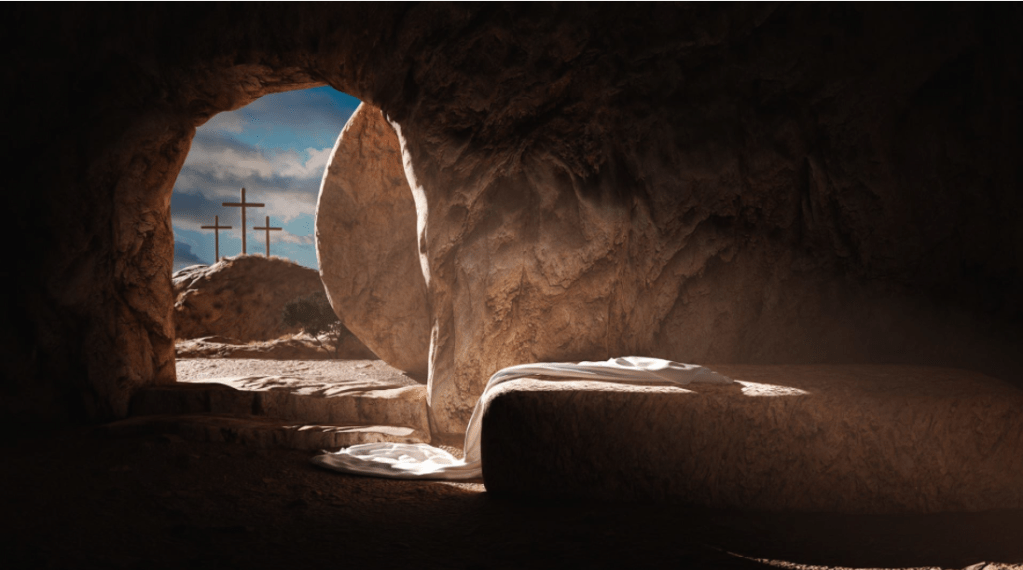
Introduction: The Greatest Divide Between Faith and Infidelity
There is perhaps no event in history that draws a sharper line between belief and unbelief than the resurrection of Jesus Christ. While the world turns its attention to Easter with traditions and pageantry, many miss the deeper meaning. For the Christian, the resurrection is not a seasonal celebration—it is the cornerstone of our faith. Paul writes in 1 Corinthians 15:17, “and if Christ has not been raised, your faith is worthless; you are still in your sins.” (NASB)
The resurrection is not a feel-good myth or a metaphor for hope. It is a historical event on which the validity of Christianity stands or falls. Jesus staked His entire identity and mission on His promise to rise from the dead. The empty tomb is the ultimate proof of His divinity and the authenticity of His message.
The Body Was Gone: A Universal Acknowledgment
Interestingly, both Jesus’ friends and enemies were unified in their agreement that the tomb was empty. His followers, though fearful and despondent at first, became bold proclaimers of His resurrection. The enemies of Jesus, including the guards and Jewish leaders, did not deny that the body was missing—they simply sought to explain it away (Matthew 28:13). “You are to say, ‘His disciples came at night and stole Him while we were asleep.’”
But this explanation falls apart under scrutiny. If the guards were sleeping, how could they testify to what happened? If they were awake, why did they allow the theft of the body, knowing that failure to guard the tomb could cost them their lives?
What Really Happened to the Body of Jesus?
There are only three possibilities: His enemies took it, His friends took it, or He rose from the dead. The first theory is implausible. Jesus’ enemies had no motive to steal the body. They had secured the tomb with a Roman seal and guards because they feared His claim that He would rise again (Matthew 27:63-64).
The second theory is equally flawed. Jesus’ disciples were fearful and in hiding. They were not expecting a resurrection. When told of the empty tomb, they were skeptical. Thomas refused to believe until he saw Jesus with his own eyes (John 20:24-25). These were not men plotting a deception.
Consider this: would a group of discouraged men risk their lives to proclaim a lie? Acts 2 tells us that Peter, who had denied Jesus, stood boldly before thousands and declared, “This Jesus God raised up again, to which we are all witnesses.” (Acts 2:32, NASB). What changed? They saw Him alive.
The Guards’ Testimony: Falsehood Under Pressure
The guards were bribed to say the body was stolen (Matthew 28:12-15). But their silence later is telling. No guard was punished. No disciple was arrested for body theft. In a city packed with millions for Passover, it would have been impossible to sneak the body away unnoticed. The claim of theft collapses under the weight of common sense.
Thomas and the Power of Proof
Thomas represents the skeptic in all of us. In John 20:25 he says, “Unless I see in His hands the imprint of the nails, and put my finger into the place of the nails, and put my hand into His side, I will not believe.” A week later, Jesus appears to him and invites him to do just that. Thomas responds, “My Lord and my God!” (John 20:28, NASB)
Jesus doesn’t scold him for wanting evidence; He supplies it. But then He adds, “Because you have seen Me, have you now believed? Blessed are those who did not see, and yet believed.” (John 20:29, NASB)
We are among those who believe without having seen. Yet our faith is not blind. It is built on the testimony of credible witnesses and the irrefutable fact of the empty tomb.
If Jesus Did Not Rise, What Must We Believe Instead?
To reject the resurrection is to accept far greater improbabilities:
- That all the guards fell asleep at the same time.
- That trained Roman soldiers allowed a group of fishermen to steal a body unnoticed.
- That the disciples spent the rest of their lives preaching a lie, enduring torture and martyrdom, with no personal gain.
- That a group of uneducated men pulled off the greatest hoax in history, fooled thousands, and changed the world.
Faith in these alternatives requires more credulity than faith in the resurrection. Paul writes in Romans 10:9, “that if you confess with your mouth Jesus as Lord, and believe in your heart that God raised Him from the dead, you will be saved.” (NASB)
The Resurrection: What It Says to the World
To science and philosophy, it says: Explain this event. To history, it says: Reproduce this event. To time, it says: Blot out this event. But to faith, it says: Receive this event.
Paul declares in 1 Corinthians 15:20, “But the fact is, Christ has been raised from the dead, the first fruits of those who are asleep.” (NASB) His resurrection is the promise of our own.
Romans 8:11 affirms, “But if the Spirit of Him who raised Jesus from the dead dwells in you, He who raised Christ Jesus from the dead will also give life to your mortal bodies through His Spirit who dwells in you.” (NASB)
Conclusion: What Will You Do With the Risen Lord?
The tomb is empty. The evidence is overwhelming. The resurrection demands a response. Jesus is not just a teacher, prophet, or martyr. He is the risen Son of God.
We all must answer the question Jesus asked Martha in John 11:25-26: “I am the resurrection and the life; the one who believes in Me will live, even if he dies, and everyone who lives and believes in Me will never die. Do you believe this?” (NASB)
This is not just about what happened 2,000 years ago. It is about what you believe today. Will you, like Thomas, fall before Him and say, “My Lord and my God”? Or will you walk away from the empty tomb, unconvinced, unchanged, and unprepared?
The evidence has been laid before you. The tomb is empty. The Savior is risen. And He calls you to follow Him. Will you accept the gospel today?
 The Simple Gospel