
Introduction
Throughout history, truth has often been misunderstood, misrepresented, and rejected. Jesus Himself was misunderstood during His time on earth. In John 18:36, Jesus declared, “My kingdom is not of this world.” Many people expected an earthly king, a political leader, not the spiritual Savior He came to be. Sadly, misconceptions did not end with His departure. They continue today, not only concerning Christ but also concerning His church, His teaching, and His commands.
Often, the church that follows New Testament teaching is labeled narrow-minded. But we must ask: Is it truly narrow-minded to speak where the Bible speaks and to remain silent where it is silent? Let us explore some of these misconceptions, compare them with Scripture, and reflect on our role in upholding the truth.
1. Is It Narrow to Teach That There Is One Church?
One of the most common charges is that the church of Christ is narrow for claiming there is only one true church. But this is not a human doctrine; it is rooted in Scripture. Jesus said in Matthew 16:18, “I also say to you that you are Peter, and upon this rock I will build My church; and the gates of Hades will not overpower it.” Note: Jesus promised to build His church—singular.
Paul reinforced this in Ephesians 4:4-5: “There is one body and one Spirit, just as you also were called in one hope of your calling; one Lord, one faith, one baptism.” The “body” is identified as the church in Ephesians 1:22-23.
This teaching is not about arrogance; it’s about faithfulness. Just as Noah built only one ark according to God’s instructions, so we must follow the pattern given in the New Testament. Acts 2:47 says, “And the Lord was adding to their number day by day those who were being saved.”
2. Is It Narrow to Abide in the Doctrine of Christ?
Another misconception is that teaching the doctrine of Christ exclusively is too strict. But 2 John 1:9 says, “Anyone who goes too far and does not remain in the teaching of Christ does not have God; the one who remains in the teaching has both the Father and the Son.”
Faithfulness requires remaining within the boundaries of inspired teaching. This means we cannot go beyond what is written (1 Corinthians 4:6). Some may say we are narrow for rejecting modern innovations or denominational doctrines, but we are simply upholding the authority of God’s Word.
3. Is It Narrow to Wear the Name “Christian” Only?
In Acts 11:26, “The disciples were first called Christians in Antioch.” Later, Peter affirms in 1 Peter 4:16, “But if anyone suffers as a Christian, he is not to be ashamed, but is to glorify God in this name.”
The name “Christian” is given by divine approval and is the only name we need. Human names divide; God’s name unites. Is it narrow to wear only the name given by God? Or is it simply an act of reverence and submission?
4. Is It Narrow to Worship Without Instruments?
Many are surprised to learn that early Christians sang without instruments. Ephesians 5:19 commands, “Speaking to one another in psalms and hymns and spiritual songs, singing and making melody with your hearts to the Lord.”
Colossians 3:16 says the same. There is no mention of instrumental accompaniment in New Testament worship. To add it is to go beyond what God has authorized. Singing is inclusive and unifying; the addition of instruments is divisive.
5. Is It Narrow to Insist on Baptism as Essential?
Here lies perhaps the most controversial charge—that we believe in “water salvation.” But what does Scripture say?
Acts 2:38 commands, “Peter said to them, ‘Repent, and each of you be baptized in the name of Jesus Christ for the forgiveness of your sins.’” Romans 6:3-4 explains the meaning: “Or do you not know that all of us who have been baptized into Christ Jesus have been baptized into His death? Therefore we have been buried with Him through baptism into death.”
Baptism is not a work of human merit. It is an act of obedience. Hebrews 5:9 states, “And having been perfected, He became the source of eternal salvation for all those who obey Him.”
The command is clear. To deny baptism’s necessity is not to widen the path but to reject part of God’s will. Jesus said, “Go therefore and make disciples of all the nations, baptizing them in the name of the Father and the Son and the Holy Spirit” (Matthew 28:19).
6. Is It Narrow to Obey What Is Written?
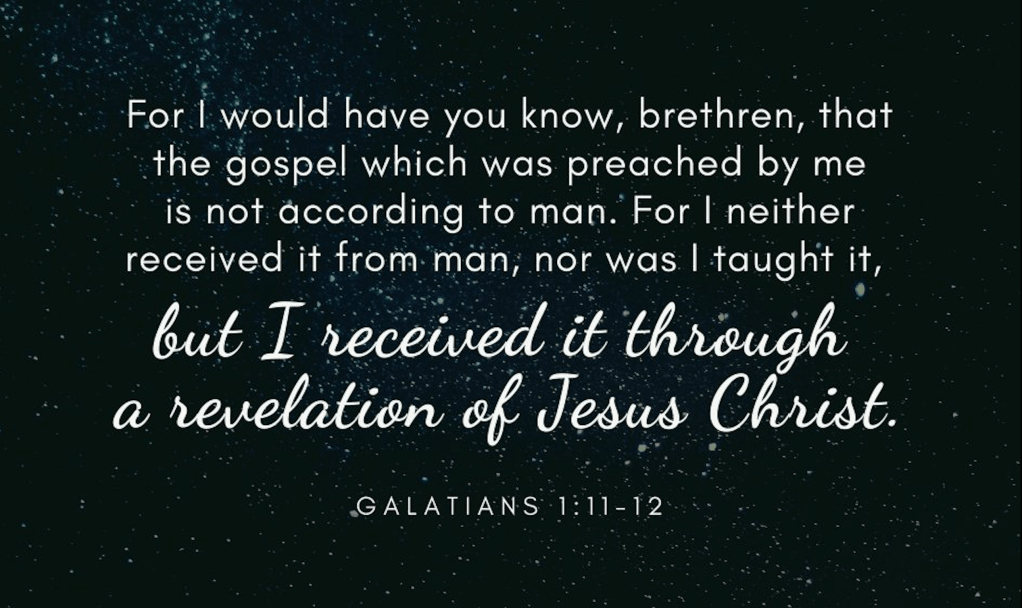
The cry of our age is tolerance, inclusion, and personal truth. Yet God calls for submission to His truth. Galatians 1:10 asks, “For am I now seeking the favor of people, or of God? Or am I striving to please people? If I were still trying to please people, I would not be a bond-servant of Christ.”
We must ask ourselves whether we are willing to be called narrow for the sake of truth. Noah was called foolish, but he was saved. Jesus was rejected by the masses, but He was the Son of God. Are we willing to stand where they stood?
Conclusion
Clarifying misconceptions is not about winning arguments; it’s about saving souls. The narrow way is not popular, but it is biblical. Jesus said in Matthew 7:13-14, “Enter through the narrow gate; for the gate is wide and the way is broad that leads to destruction, and there are many who enter through it. For the gate is narrow and the way is constricted that leads to life, and there are few who find it.”
Let us be people who speak where the Bible speaks, who teach what the Bible teaches, and who love others enough to tell them the truth. If that is considered narrow, then let us wear it as a badge of honor—not in arrogance, but in humble obedience to our Lord.
Let us walk the narrow road. It may not be popular, but it leads to life eternal.





 The Simple Gospel